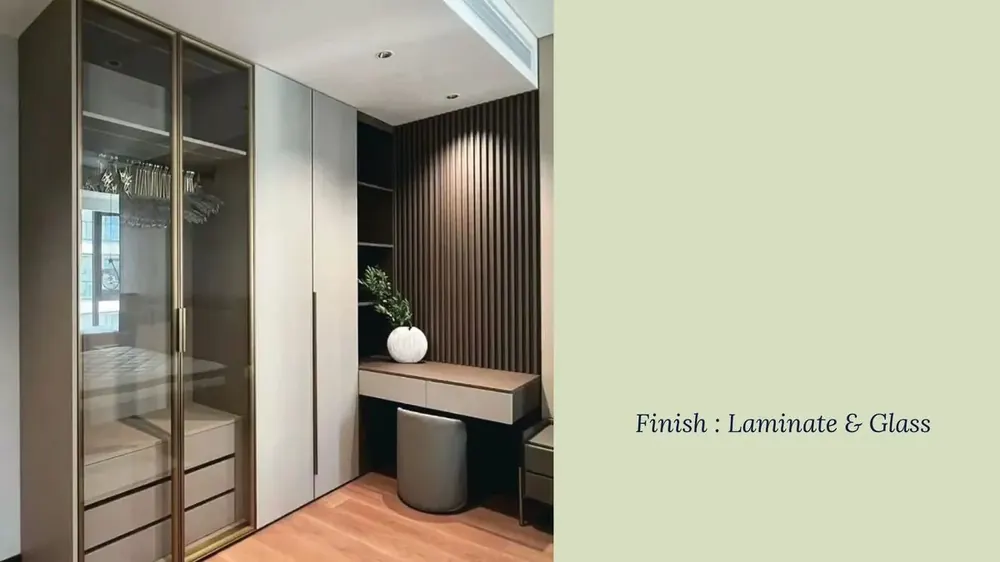
Most complaints about a "small" wardrobe aren't actually about total space — they're about poor internal zoning. A well-planned interior can fit noticeably more into the same external dimensions than a wardrobe with generic, evenly-spaced shelves.
The three-zone principle
A well-designed wardrobe is planned in three vertical zones, based on how often you access each area and how heavy the items are.
Top zone (least accessed)
Reserved for items used occasionally — extra blankets, luggage, seasonal clothing, or storage boxes. Since this zone is harder to reach, it should hold the things you need least often.
Middle zone (most accessed)
This is prime real estate, at eye and arm level — used for everyday clothes: shirts on hangers, folded t-shirts, sarees, and drawers for innerwear and accessories. This zone should get the most thoughtful planning, since it's opened multiple times a day.
Bottom zone (heaviest items)
Reserved for shoes, heavier folded items, or a pull-out laundry basket. Keeping heavy items low reduces strain and keeps the wardrobe more stable.
Practical zoning features worth including
- Dedicated hanging space: Separate long-hang (for dresses, sarees, coats) from short-hang (shirts, trousers) to avoid wasted vertical space.
- Drawer units: For innerwear, accessories and jewellery — keeps small items from disappearing into open shelves.
- Pull-out shoe racks: Angled shoe storage uses less depth than flat shelving and keeps shoes visible.
- A dedicated trouser/tie pull-out: Small addition, but genuinely useful for daily dressing.
- Mirror placement: Either on the wardrobe shutter or a separate full-length mirror nearby, positioned with enough clearance to actually use it.
Planning for two people sharing one wardrobe
If a wardrobe is shared, it's worth splitting the internal layout down the middle — mirroring the three-zone plan on each side — rather than dividing by shelf type. This avoids the daily friction of reaching across someone else's section for your own clothes.
We plan the internal zoning of every wardrobe based on a short conversation about your actual clothing mix — how many hanging items, how many folded, how many pairs of shoes — before finalizing the design, not just a generic layout.