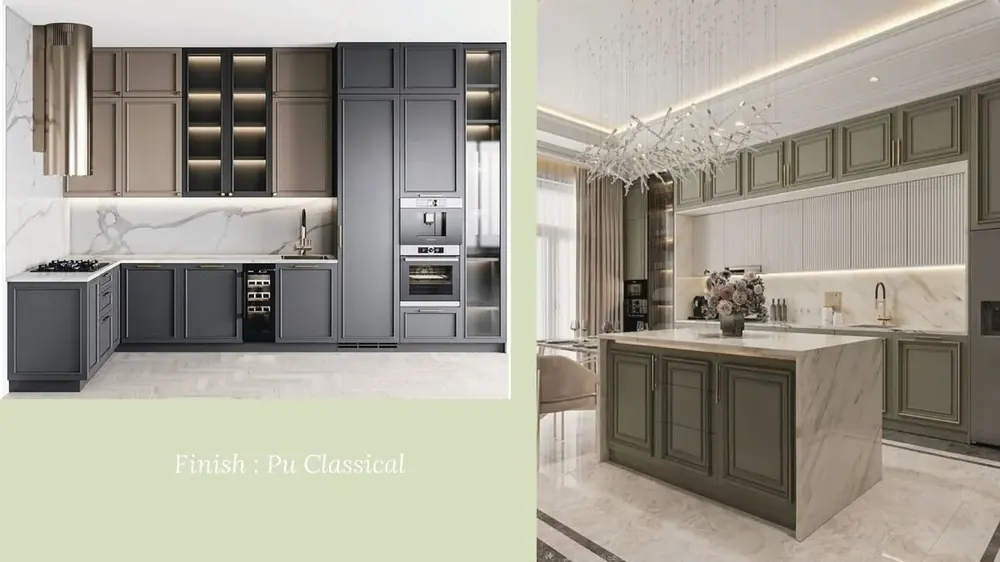
The finish on your kitchen shutters affects three things you'll live with every day: how it looks, how easy it is to clean, and how long it lasts. Here's a practical comparison of the four most common modular kitchen finishes.
Laminate
A thin layer of laminate sheet bonded onto a base board (usually plywood or MDF). It's the most widely used finish because it balances cost, durability and a huge range of colours and textures — including wood-grain and stone-look options. Laminate resists scratches reasonably well and is easy to wipe clean, making it a practical everyday choice.
Acrylic
A high-gloss, mirror-like sheet finish known for its vibrant colour depth. Acrylic shutters make a kitchen feel bright and premium, but the glossy surface shows fingerprints and minor scratches more visibly than laminate, so it needs slightly more regular wiping to stay looking sharp.
PU (Polyurethane)
A sprayed and baked paint finish applied directly onto the shutter. PU gives a smooth, seamless, high-end matte or gloss look and is popular for handle-less, minimalist kitchen designs. It's more premium in feel than laminate or acrylic, with a cost to match, and offers good resistance to minor wear when properly cured.
Lacquered Glass
Glass panels coated with a coloured lacquer on the back, used mostly for shutter fronts or backsplashes. It gives a distinctive, glossy, colour-rich look that's easy to wipe clean and doesn't stain, though glass shutters need careful handling since they can chip if struck hard at the edges.
Quick comparison
- Best for tight budgets: Laminate — widest range of designs at the most accessible price point.
- Best for a bold, colourful look: Acrylic — the glossiest, most vibrant colour depth.
- Best for a minimalist, handle-less design: PU — smooth seamless finish ideal for modern aesthetics.
- Best for a distinctive accent: Lacquered glass — often used selectively rather than on every shutter, to control cost.
A practical tip
Many homeowners mix finishes rather than choosing just one — for example, laminate on the base cabinets (which see the most daily wear) and acrylic or lacquered glass on a few accent wall units. This keeps the overall cost sensible while still giving the kitchen a premium look where it's most visible.
We carry sample swatches of all four finishes during the free site visit, so you can see and feel the actual material — not just a photo — before finalizing your design.